
Greyhound Trainers UK — Role, Form Records and Results
Best Greyhound Betting Sites – Bet on Greyhounds in 2026
Loading...
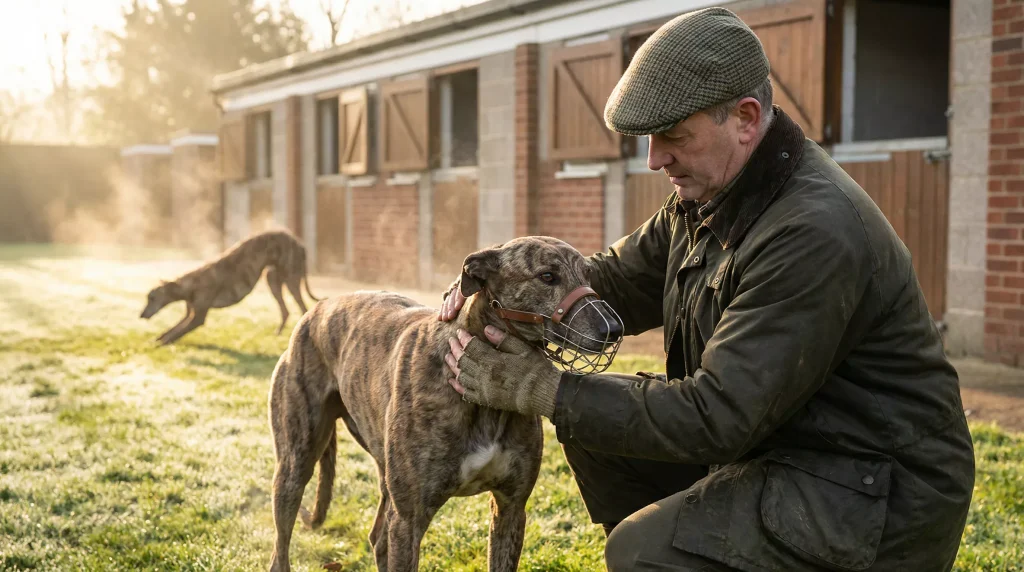
Behind every greyhound result sits a trainer — the hand behind the hound. The trainer decides when a dog races, at which track, over which distance and in what condition. They manage the dog’s fitness, diet, recovery and race schedule, and their decisions shape the form book in ways that are not always visible in the finishing positions alone. In UK licensed racing, approximately 500 trainers hold GBGB licences, supported by around 3,000 kennel staff, and between them they are responsible for the preparation and welfare of every dog that appears in a result line.
For punters, trainer form is one of the most underused analytical tools in greyhound racing. Most bettors study the dog; fewer study the kennel. Yet trainer patterns — strike rates, track preferences, distance specialisms, seasonal form — are measurable, consistent and, in many cases, more predictive than individual dog form over small samples. Understanding the trainer framework, how to read trainer form in results data and the welfare responsibilities that come with the licence adds a layer of analytical depth that sharpens any form assessment.
The Licensed Trainer Framework
To train greyhounds for licensed racing in the UK, a person must hold a GBGB trainer’s licence. The licence is granted after an application process that includes kennel inspections, background checks and evidence of competence in greyhound care and management. Once licensed, trainers are subject to ongoing regulatory oversight: their kennels are inspected regularly, their dogs are subject to random drug testing, and they must comply with GBGB’s rules on race entries, retirement reporting and welfare standards.
The licensed trainer population of approximately 500 is spread unevenly across the country, with concentrations near the busiest tracks. The south-east — close to Romford, Crayford and Hove — has a dense cluster of kennels, as does the Midlands around Monmore and the wider West Midlands corridor. Northern trainers are fewer in number, reflecting the smaller number of licensed tracks in Yorkshire and the North East. This geographic distribution creates regional ecosystems where certain trainers dominate particular tracks, and where kennel form patterns are track-specific rather than national.
Each trainer manages a string of dogs — typically between ten and forty, depending on the scale of the operation. Larger kennels have more flexibility in race placement, because they can spread their entries across multiple tracks and multiple meetings per week. Smaller operations tend to concentrate on one or two home tracks, which means their dogs build deeper form lines at specific venues but may lack the cross-track experience that larger kennels develop. For punters, knowing the size and style of a kennel operation adds context to the results: a dog from a large, multi-track kennel being entered at an unfamiliar venue may be on a specific campaign, while the same move from a small, single-track kennel may simply reflect a scheduling gap.
The roughly 3,000 kennel employees who work alongside trainers handle the day-to-day care of the dogs — feeding, exercising, grooming and monitoring health. The quality of this support staff matters, because a well-run kennel produces dogs in consistent condition, which translates into consistent form. A kennel that is understaffed or poorly managed is more likely to produce erratic results, and that inconsistency shows up in the data over time.
Reading Trainer Form in Results
Most greyhound form databases include the trainer’s name alongside each result, which makes it possible to filter and analyse results at the kennel level rather than just the individual dog level. Trainer form — the percentage of winners from total runners over a defined period — is a powerful indicator of kennel fitness. A trainer running at a strike rate of 25% or above over the last month is likely having a strong spell, and dogs from that kennel deserve closer attention even if their individual form figures are not immediately compelling.
The reverse also holds. A trainer whose strike rate has dropped sharply — from, say, 20% to 8% over a few weeks — may be dealing with a kennel issue: illness, a change in feed, a disruption to routine. The individual dogs may look fine on paper, but the kennel-level data is signalling a problem that has not yet been captured in the individual results. This kind of meta-analysis is not difficult, but it does require the discipline to check trainer statistics alongside dog form, which most casual punters skip.
Track-specific trainer form is an even more refined tool. Some trainers perform disproportionately well at certain venues — either because they are based nearby and know the track intimately, or because their dogs’ running styles suit a particular track geometry. Filtering a trainer’s results by venue over the last three to six months can reveal these biases, which are not visible in the aggregate national statistics. A trainer with a modest overall strike rate but an exceptional record at one specific track is a signal worth following when they enter dogs at that venue.
Seasonal patterns also appear in trainer form. Some kennels peak in the summer, when training conditions are optimal and dogs are in full fitness. Others run better in the winter, perhaps because their dogs are hardier or because their training methods suit cooler conditions. These patterns are consistent enough across years to be analytically useful, though they require a longer data window — at least twelve months — to identify reliably.
Trainer CPD and Welfare Responsibilities
Licensed trainers are not static qualification holders — they are subject to a continuing professional development (CPD) requirement that GBGB has expanded significantly in recent years. In 2024, participants across the industry logged more than 580 hours of free CPD, covering subjects including greyhound nutrition, injury prevention, first aid, welfare compliance and race preparation. This investment in trainer education is part of GBGB’s broader welfare strategy and reflects a regulatory philosophy that treats trainer competence as a key variable in animal welfare outcomes.
The welfare responsibilities attached to a trainer’s licence are substantial. Trainers must ensure that every dog in their care receives appropriate veterinary attention, adequate nutrition, suitable housing and a documented retirement outcome when its racing career ends. They are accountable for the condition of dogs presented at the track — a dog that arrives unfit to race will be withdrawn by the track veterinarian, and repeated incidents can result in licence sanctions.
The welfare obligations of trainers extend beyond the racing period. Lisa Morris-Tomkins, Chief Executive of the Greyhound Trust, has described as unacceptable the number of racing greyhounds that never get the chance to experience a loving home after their careers end — a challenge that falls, in the first instance, on the trainer who must report a retirement outcome for every dog that leaves their kennel.
For punters, the welfare dimension of training is not just an ethical consideration — it is a practical one. A trainer who invests in CPD, maintains high kennel standards and manages dogs’ careers carefully is more likely to produce consistent results, because the dogs are in better physical and mental condition. The converse is also true: a kennel with welfare issues will eventually produce erratic form as the underlying condition of the dogs deteriorates. Reading the trainer’s track record in welfare — not just in winners — gives a fuller picture of the operation behind each result in the form book.