Greyhound Results Sheffield — Owlerton Stadium Data
Best Greyhound Betting Sites – Bet on Greyhounds in 2026
Loading...
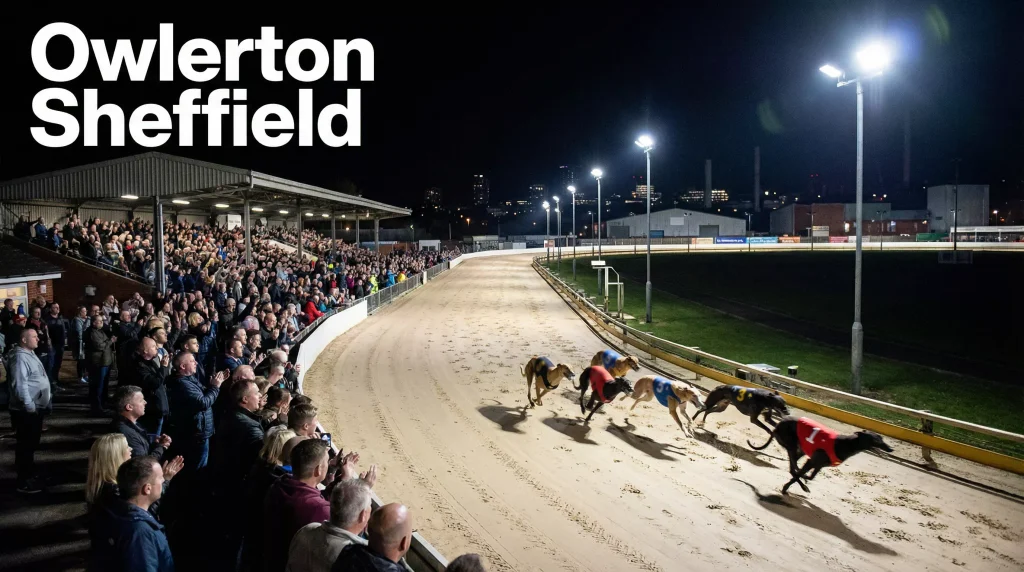
Owlerton Stadium is Sheffield’s greyhound venue and Yorkshire’s greyhound stage — a GBGB-licensed track that has been part of the region’s sporting fabric for decades. It is one of 18 licensed stadiums currently operating across England and Wales, and the only one serving the broader Yorkshire and Humber area. That geographic isolation gives Owlerton a particular significance: for trainers and owners based in the North, it is the nearest licensed track that does not require a cross-Pennine or southbound trip, and for punters following Yorkshire-based kennels, it is where the bulk of local form is generated.
Sheffield’s greyhound scene does not carry the same media profile as London or the Midlands circuits, but the results it produces are no less important for serious form analysis. Owlerton stages a regular fixture programme, draws competitive fields and generates a steady flow of data that feeds into the national form book. Understanding the track’s layout, its quirks and how to access its results efficiently is a practical necessity for anyone who studies greyhound form beyond the headline venues.
Owlerton Track Profile: Distances and Surface
Owlerton races over distances of 270, 480 and 660 metres, with the 480m trip forming the standard race distance. The circuit is a mid-sized oval with bends that sit between the tighter London tracks and the more expansive southern venues in terms of radius. This geometry produces a racing style that rewards dogs with clean early pace and the ability to hold their line through the turns without drifting wide — a trait that matters more at Owlerton than at larger, more forgiving circuits.
The 270m sprint is a box-to-wire affair where trap draw and reaction speed dominate. Form data from these races is useful primarily for identifying quick breakers, but it tells you relatively little about a dog’s overall ability. The 480m distance is where the meaningful analysis happens: it is long enough for races to develop a tactical shape and short enough that early pace remains a decisive factor. The 660m marathon trip appears less frequently on the card but is a valuable test of stamina that separates out dogs with a different running profile from the standard middle-distance pack.
Across all licensed UK tracks, favourites win approximately 35.67% of graded races, though this figure varies meaningfully from venue to venue. Track-specific conditions at Owlerton — including the tightness of its bends, the sand surface characteristics and the typical field quality — all contribute to whether the Sheffield favourite rate sits above or below that national average. Punters who track favourite performance by venue over a sustained period build a more nuanced picture than those who apply a single national figure everywhere.
The sand surface at Owlerton is maintained to GBGB standards, with regular inspection and preparation. Going conditions can shift depending on weather — Sheffield’s northern climate delivers more sustained wet spells than many southern venues, and heavy rain can produce a slower, more holding surface that favours stamina runners over pure speedsters. Checking the going report before comparing Owlerton times with form from other tracks is a small but important habit for accurate cross-venue analysis. Trainers local to Yorkshire will often have a strong read on how the going is playing at Owlerton from day to day, and that informational edge is one reason why locally trained dogs tend to perform consistently at their home venue.
Accessing Sheffield Results
Sheffield results are distributed through the standard GBGB data infrastructure. After each race, finishing positions, starting prices, sectional times and race comments are available on major bookmaker platforms and independent greyhound form databases. The process is no different from accessing results for any other licensed track: the data flows automatically into the same systems used by Romford, Hove or any other GBGB venue.
For users who want to isolate Owlerton results specifically, most form sites provide a track-level filter. Selecting Sheffield and specifying a date range returns the full meeting card in chronological order, with each race displaying trap draw, finishing positions, SP, winning time and official distances. This is the cleanest way to build a track-specific picture — reviewing results meeting by meeting rather than pulling individual races out of context.
One consideration particular to Sheffield is the track’s fixture frequency relative to larger venues. Owlerton does not race as often as Romford or Monmore, which means the gap between meetings can be slightly longer and the volume of recent form available for any given dog may be thinner. This does not make the data less reliable — it simply means that patience is required when building a form assessment for dogs that race primarily at Sheffield. Two or three solid runs at Owlerton can be more informative than a string of races at a higher-frequency venue where the competitive environment varies more from card to card. The key is to read each result in full — including sectional times and race comments — rather than relying on finishing positions alone.
Sheffield Fixture List and Feature Events
Owlerton’s fixture list typically includes a mix of BAGS afternoon meetings and scheduled evening open cards. The balance between these fixture types can shift depending on the season and commercial demand, but the overall pattern gives Sheffield a regular presence in the national racing schedule. The evening open meetings tend to draw the stronger fields, with trainers entering their better-graded dogs for the higher prize money and more competitive environment.
Sheffield also hosts feature events and regional competitions that attract entries from beyond the regular Owlerton kennel pool. These fixtures provide a useful benchmark: a dog that performs well against visiting opposition at Owlerton is demonstrating a level of ability that straightforward graded wins against familiar rivals cannot fully capture. Noting which results come from feature events — and giving them appropriate weight in a form assessment — adds depth to the analytical picture.
The broader context of UK greyhound racing is worth keeping in mind when evaluating Sheffield’s place in the fixture calendar. The sport is navigating a period of legislative scrutiny — Wales has moved to ban greyhound racing, and Scotland has followed a similar path. These developments do not directly affect Owlerton, but they shape the national conversation around the sport’s future and, by extension, the fixture landscape. Huw Irranca-Davies, Wales’s Deputy First Minister, framed the decision in stark terms when introducing the Welsh ban: We have listened to the public, considered the evidence, and are taking decisive action to prioritise animal welfare.
(GOV.WALES) For English tracks like Owlerton, the immediate impact is nil, but the longer-term direction of regulation remains a live question that could influence everything from fixture volume to funding.
For practical scheduling, the upcoming fixture list is published weekly by GBGB and replicated on all major form sites. Checking at the start of each week confirms which days Owlerton is racing, what meeting type applies and how many races are carded — giving punters enough lead time to plan their analysis or betting activity around Yorkshire’s greyhound stage.