Greyhound Racing Regulations — Licensing, Rules and Compliance
 Available in US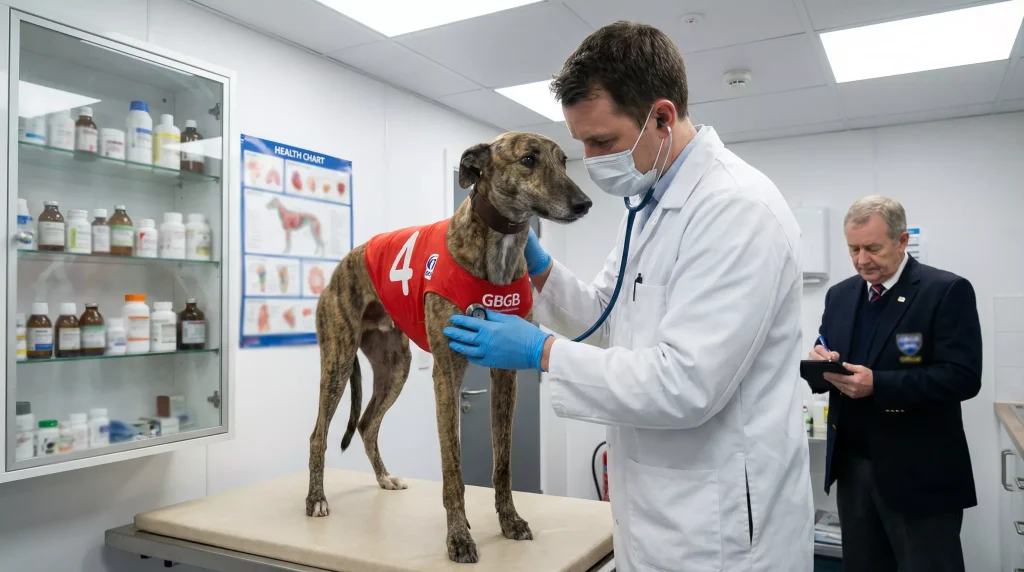
UK greyhound racing operates under a regulatory framework that governs every aspect of the sport — from how tracks are built and maintained to how dogs are tested for prohibited substances. The rulebook is extensive, covering licensing, race conduct, welfare obligations, officiating standards and the distinction between regulated and unregulated racing. For punters, this framework is the invisible architecture behind every result: it ensures that the data in the form book is produced under consistent, auditable conditions rather than in an unregulated free-for-all. The wider context is set out in our UK greyhound results guide.
Understanding the regulations is not just a matter of legal interest — it is practically useful. The rules determine what counts as a fair race, what protections exist for the dogs, and what standards the results data is held to. This guide covers the three pillars of the regulatory system: GBGB licensing, the core rules of racing, and the critical distinction between licensed and flapping tracks.
GBGB Licensing Standards
The Greyhound Board of Great Britain licenses tracks, trainers, kennel staff and racing officials. A track that holds a GBGB licence has met a comprehensive set of standards covering the racing surface, safety barriers, veterinary facilities, kennelling for visiting dogs, lighting, timing equipment and public safety. These standards are not aspirational — they are conditions of the licence, and failure to maintain them can result in suspension or revocation.
Approximately 500 trainers hold GBGB licences, alongside around 700 officials who manage and supervise race meetings across the 18 licensed stadiums. Trainers must submit to regular kennel inspections, ensure that their dogs are microchipped and registered, maintain accurate records of every dog in their care, and report the outcome for every dog that leaves their kennel — whether it is rehomed, retired or transferred. Officials — stewards, racing managers, veterinary surgeons — are appointed to each meeting and are responsible for enforcing the rules on the day.
Track surface quality is monitored through a partnership with the Sports Turf Research Institute (STRI), which now conducts quarterly inspections of every licensed stadium. These visits assess the sand composition, drainage, compaction and overall condition of the racing surface — factors that directly affect the safety of the dogs and the reliability of the results. In 2024, industry participants accumulated more than 580 hours of continuing professional development (CPD), covering subjects from injury prevention to nutrition, which reflects GBGB’s view that regulatory compliance is an ongoing process rather than a one-time qualification.
The licensing framework is self-regulatory: GBGB is not a government body, and its authority derives from the agreement of its participants rather than statute. This self-regulatory model gives the Board operational flexibility but also attracts criticism from those who argue that an industry regulating itself cannot be fully independent. The industry’s position is that the depth of its regulatory structure — covering everything from track surfaces to drug testing to retirement reporting — provides protections that go well beyond those available to most companion animals. Critics counter that these protections, however comprehensive, sit alongside an activity that carries predictable risks of injury and death.
Core Race Rules and Officiating
Every GBGB-licensed race is conducted under a uniform set of rules that cover trap allocation, race starts, interference during running, finishing procedures and post-race protocols. The rules are designed to ensure that each race is a fair test of the participating dogs’ ability, with consistent standards applied regardless of the venue, the meeting type or the level of competition.
Trap allocation is managed by the track’s racing manager, who assigns dogs to traps based on their running style and previous performances. The aim is to produce competitive, balanced fields where each dog has a reasonable chance of racing without being systematically disadvantaged by its starting position. While perfect balance is impossible — trap 1 carries a statistical advantage at most tracks — the grading and trap-allocation process is designed to minimise unfair imbalances.
Race starts are controlled by an electronic trapping system. The traps open simultaneously when the mechanical hare passes the starting position, and any malfunction — a trap that opens late or fails to open — results in a void race or a re-run, depending on the circumstances. Post-race, the stewards review any incidents of interference: dogs that impede other runners on the bends, dogs that cross the racing line, or dogs that fail to pursue the hare. Interference rulings can affect the official result — a dog may be disqualified or demoted if the stewards determine that it gained an unfair advantage through interference, which is recorded in the race comments and visible in the form book.
Drug testing is a core component of the officiating framework. Dogs are selected for testing at every meeting — both pre-race and post-race — and samples are analysed for prohibited substances including performance-enhancing drugs, sedatives and other controlled compounds. A positive test results in automatic disqualification of the result, sanctions against the trainer and a formal investigation. The testing regime exists to protect the integrity of the form book: a result produced under regulated conditions, with drug testing, is categorically more reliable than one produced without these safeguards.
Licensed vs Flapping: Why It Matters for Results
The distinction between GBGB-licensed tracks and independent (flapping) tracks is the single most important regulatory fact for anyone reading greyhound results. Licensed tracks operate under the full GBGB framework: consistent rules, drug testing, veterinary provision, injury reporting and standardised results publication. Flapping tracks operate outside this framework, with no regulatory oversight, no mandatory drug testing and no obligation to publish results in a standardised format.
The practical consequence is that results from licensed tracks are reliable data produced under controlled conditions, while results from flapping tracks carry no such guarantee. A finishing position, SP or time from a licensed meeting can be compared with results from any other licensed meeting because the conditions of production are standardised. A result from a flapping track cannot be compared on the same basis, because the conditions — the track surface, the officiating, the drug-testing regime (or lack thereof) — are unknown and unverified.
Flapping tracks do still exist in the UK, though their number has diminished. They tend to operate informally, staging meetings for local communities without the infrastructure or costs associated with GBGB licensing. The dogs that race at flapping tracks are not registered with the GBGB, their results do not appear in the official form book, and their welfare is not monitored under the GBGB framework. For punters, the message is unambiguous: if you are building a form picture, use licensed results. They are the only data produced under conditions that make systematic analysis meaningful. The regulator behind them is the GBGB.
The regulatory framework is not perfect, and it is subject to ongoing debate about its scope, its independence and its adequacy. But it is the structure that produces the results you read, and understanding its rules — the rulebook behind the form book — is fundamental to engaging with UK greyhound racing data intelligently.
