Forecast and Tricast in Greyhound Racing — Returns Explained
Best Greyhound Betting Sites – Bet on Greyhounds in 2026
Loading...
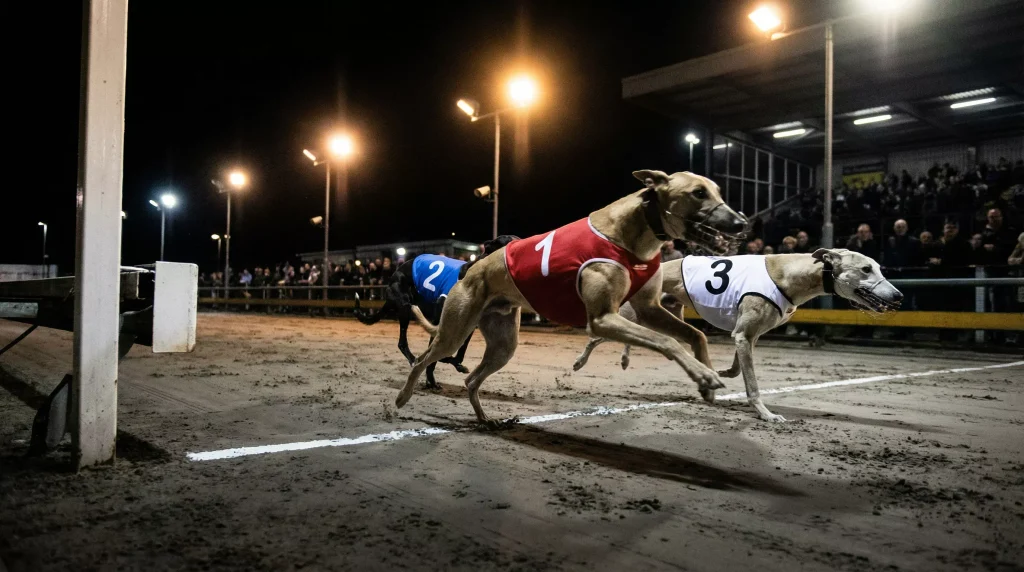
Forecast and tricast bets are built on a simple premise: predicting the order of finish. A forecast requires you to name the first and second dog in the correct sequence. A tricast goes further — first, second and third, all in order. The appeal is obvious: the returns are substantially larger than a straight win bet, because getting two or three finishing positions right in exact order is genuinely difficult. In greyhound racing, where six-runner fields make the mathematical combinations more manageable than in horse racing, forecasts and tricasts sit at the heart of the sport’s betting culture.
Understanding how these bets work — and, critically, how to find their returns in published results data — is essential for anyone who follows greyhound racing beyond casual interest. The returns vary dramatically from race to race, and predicting the order is both an analytical exercise and a test of how well you can read the form book. This guide breaks down the mechanics of each bet type, explains what drives the payout figures, and shows where forecast and tricast dividends appear in the results.
How Forecast Bets Work
A straight forecast (sometimes called an exact forecast or computer straight forecast, abbreviated CSF) requires you to select the first and second finishers in the correct order. If you name Dog A to win and Dog B to finish second, you collect only if that exact outcome occurs. Reverse the positions — Dog B first, Dog A second — and you lose.
The return on a straight forecast is calculated by a formula based on the starting prices of the first and second finishers. It is not simply a multiplication of the two individual SPs; the calculation accounts for the combined probability of that specific finishing order. In practice, a forecast involving two short-priced runners will return less than one involving a favourite and an outsider in second, because the former outcome is more predictable and therefore priced more tightly.
A reverse forecast hedges the order question. Instead of naming which dog finishes first and which finishes second, you select two dogs and win if they fill the first two positions in either order. The cost is double — you are effectively placing two straight forecasts — but the flexibility means you do not need to predict which of your two selections beats the other. The payout is the CSF dividend for the combination that actually occurred.
The top three runners in the betting market win roughly 71–74% of all greyhound races between them, which means the most common forecast outcomes involve combinations of market leaders. This predictability compresses the returns on popular forecast combinations — a 1st-favourite/2nd-favourite straight forecast will pay less than a 3rd-favourite/outsider combination, precisely because the former happens more often. Punters who consistently identify less obvious forecast combinations, using form analysis rather than market position, are the ones who extract genuine value from this bet type.
How Tricast Bets Work
A tricast extends the forecast concept to three runners: you must name the first, second and third finishers in the correct order. The mathematical complexity increases significantly — in a six-runner greyhound race, there are 120 possible permutations of the first three finishers, compared with 30 for the first two. This difficulty is reflected in the returns, which can be dramatically larger than forecast payouts for the same race.
The computer tricast (CT) return is calculated from the SPs of the first three finishers using a standardised formula. As with forecasts, the return varies depending on the prices of the placed dogs: a tricast involving three short-priced runners pays less than one where an outsider fills one of the placed positions. In a race where a 10/1 shot finishes third behind two favourites, the tricast return will be meaningfully higher than if the third finisher was a 2/1 chance.
A combination tricast covers all possible orderings of your three selected runners. Since three dogs can finish in six different sequences (3! = 6), a combination tricast costs six times the unit stake. The payout is the CT dividend for whichever permutation occurs. This is a popular approach among punters who are confident they can identify the three placed dogs but less certain about the exact order — a reasonable position, given how frequently the second and third finishers are separated by a neck or a short head.
The analytical challenge with tricasts is that the third-place position is inherently harder to predict than first or second. A dog that finishes third might have been impeded at the second bend, or it might have been closing from behind and simply ran out of track. The margin between third and fourth in a greyhound race is often fractions of a length, which means a slight difference in running line or race luck can change the tricast payout entirely. This randomness is both the risk and the reward: tricasts pay well precisely because the third position is noisy.
Reading Forecast and Tricast Returns in Results
Forecast and tricast dividends are published as part of the standard results data for every licensed UK greyhound race. On most results platforms, the CSF (computer straight forecast) and CT (computer tricast) returns are displayed below the individual runner data, expressed as a payout per £1 unit stake. A CSF of £15.40 means a £1 straight forecast on the correct 1-2 combination returned £15.40. A CT of £87.20 means a £1 tricast on the exact 1-2-3 order returned £87.20.
These dividends are calculated after the race from the actual SPs of the placed runners, using a standardised formula that all licensed bookmakers apply. The figure is the same regardless of which bookmaker you placed the bet with — it is a universal return based on market prices, not a proprietary payout. This standardisation makes forecast and tricast dividends directly comparable across races, tracks and dates, which is useful for anyone tracking the typical returns in different race types.
For analytical purposes, tracking CSF and CT dividends over time reveals patterns about predictability. Races with low CSF returns are ones where the market got the top two right at short prices — with favourites winning 35.67% of graded UK races, many forecast outcomes involve at least one short-priced dog, which compresses the payout. Races with high CSF and CT returns are ones where the market got it wrong — an outsider placed, the order was unexpected, or both. Systematically noting these dividend patterns by race grade, track and time of year can highlight situations where the market is structurally less efficient, creating opportunities for punters who are willing to go against the obvious.
One practical tip: when reviewing results for form analysis rather than betting, the forecast and tricast dividends are still informative. A race that produced a very high CSF tells you the result was unusual — the market did not see it coming, which means either the form was misleading or something unpredictable happened during the race. Checking the race comments alongside the dividend helps you determine which. If the market favourite was crowded on the first bend and the winner ran a clear race from an outside trap, the high dividend reflects bad luck rather than bad form. That distinction matters for future selections.