Greyhound Adoption UK — Rehoming a Retired Racer
Best Greyhound Betting Sites – Bet on Greyhounds in 2026
Loading...
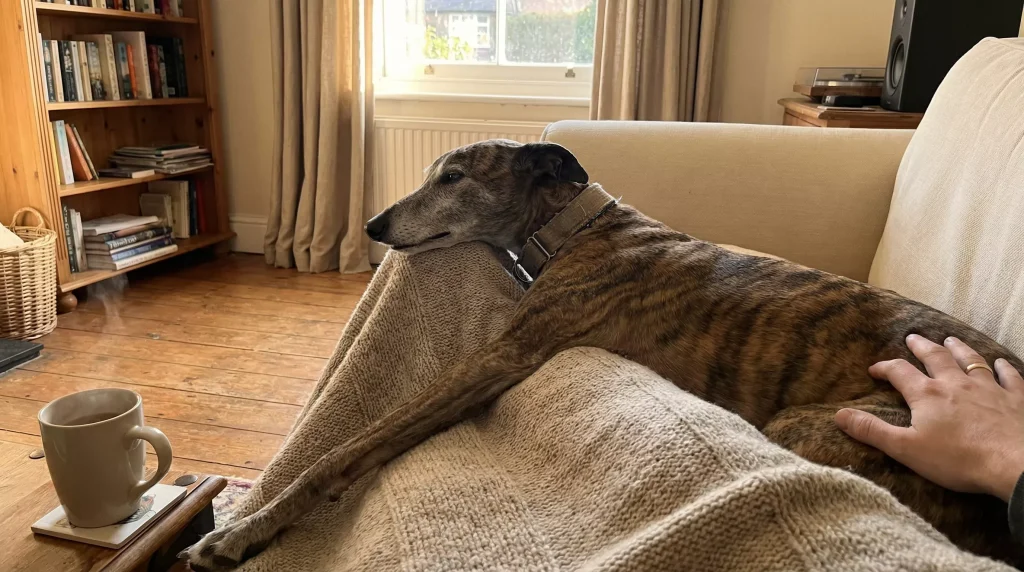
Every year, thousands of greyhounds finish their racing careers and need somewhere to go. For the fortunate majority, that somewhere is a family home — a second career on the sofa, as the adoption community puts it. The rehoming pipeline that connects retired racers with new owners has grown significantly in recent years, driven by investment from the sport’s governing body, the work of dedicated charities and a growing public appetite for greyhounds as companion animals. But the system is not without its pressures, and understanding how adoption works in practice — from kennel to couch — matters for anyone who follows the sport and cares about what happens after the last race.
This guide explains the rehoming process, presents the latest adoption statistics and outlines what potential adopters can expect when bringing a retired greyhound into their home.
How the Rehoming Pipeline Works
When a greyhound’s racing career ends — whether through retirement at the trainer’s discretion, injury, declining performance or age — the dog enters a structured process designed to find it a permanent home. Under GBGB regulations, trainers are responsible for ensuring that every dog leaving the sport has a documented outcome: rehomed through an approved organisation, returned to its owner, or retained by the trainer as a pet.
The primary route for formal rehoming is the network of GRS-approved (Greyhound Rehoming Scheme) shelters and charities. These organisations receive retired greyhounds from trainers, assess them for temperament and health, provide any necessary veterinary treatment, and match them with suitable adopters. The Greyhound Trust is the largest single rehoming charity, but the GRS network includes numerous smaller, regional organisations that operate independently while adhering to GBGB’s rehoming standards.
The pipeline is not instantaneous. A dog arriving at a rehoming centre may spend several weeks — or, in some cases, months — in the shelter before being matched with a new home. During this period, the shelter staff assess the dog’s behaviour around other animals, children and household environments, building a profile that helps ensure a suitable match. Dogs that have spent their entire lives in a kennel and training environment need time to adjust to domestic life, and responsible shelters invest in this transition rather than rushing placements that might not stick.
Not all retired greyhounds pass through the formal shelter system. Some are rehomed directly by trainers to people within their personal or professional networks — former owners, racing contacts or members of the public who approach the kennel directly. These private arrangements are harder to track statistically, though GBGB requires trainers to report the outcome for every dog leaving their care. Additionally, some greyhounds are retained by their trainers or owners as pets, which counts as a successful outcome in the data but does not involve the formal rehoming infrastructure.
Adoption Statistics: Current Trends
The most recent data paints a broadly positive picture. GBGB reports that 94% of greyhounds leaving the sport in 2024 were successfully retired — the highest figure recorded, up from 88% in 2018. Within that total, adoption figures from GRS-approved shelters rose by 37% in the first half of 2025 compared with the same period in 2024, indicating that demand for retired greyhounds as pets is growing and that the rehoming organisations are scaling their capacity to meet it.
The improvement in adoption rates has been accompanied by a dramatic reduction in economic euthanasia. In 2024, just three greyhounds were euthanised for economic reasons — down from 175 in 2018, a decline of 98%. This figure is arguably the single most significant welfare data point in the sport, because economic euthanasia — putting a healthy dog to sleep because no home or space is available — represents the starkest failure of the rehoming system. Its near-elimination reflects both increased shelter capacity and a cultural shift within the industry that now treats economic euthanasia as categorically unacceptable.
The challenge that remains is capacity under pressure. In 2023, 1,499 greyhounds were recorded as remaining with their trainer or owner after retiring, compared with 715 in 2022. The spike was attributed to the cost-of-living crisis reducing the number of people willing to take on a new pet and a shortage of available places in rehoming centres. While the 2025 adoption data suggests this pressure is easing, the episode illustrated the vulnerability of a rehoming system that depends on public goodwill and charitable capacity — both of which are sensitive to economic conditions.
What to Expect When Adopting a Greyhound
Retired greyhounds are, by temperament, among the most straightforward breeds to integrate into a family home — a fact that surprises many first-time adopters who expect a high-energy athlete and instead find a calm, affectionate dog that sleeps for most of the day. The breed’s resting metabolism is low, and most retired racers are content with two moderate walks and extensive sofa time. They are sometimes described as the world’s fastest couch potatoes, which is not far from the truth.
The adoption process through a GRS-approved shelter typically involves an initial enquiry, a home visit or assessment, and a matching conversation where the shelter team discusses which available dogs might suit the adopter’s living situation. Factors considered include whether the home has a secure garden, whether there are other pets, whether there are young children, and how much time the adopter spends at home during the day. The process is thorough but not onerous — it is designed to protect the dog’s welfare and increase the likelihood of a permanent placement.
New adopters should be aware of a few breed-specific considerations. Greyhounds have thin skin and low body fat, which makes them sensitive to cold weather — a decent coat is a practical necessity for winter walks rather than a fashion accessory. Their prey drive varies from dog to dog; some retired racers are perfectly safe around cats and small dogs, while others are not, and the rehoming centre’s assessment is the most reliable guide on this point. They can also be prone to separation anxiety in the early weeks, having spent their lives in the company of other dogs, but this typically resolves with patient, consistent routine.
The financial commitment is modest by dog-ownership standards. Adoption fees through GRS shelters typically cover initial veterinary checks, vaccinations and neutering. Ongoing costs — food, insurance, routine veterinary care — are comparable with other medium-to-large breeds. For anyone considering dog ownership, a retired greyhound represents a genuinely rewarding option: a low-maintenance, affectionate companion with a backstory that, for better or worse, connects directly to one of Britain’s oldest sporting traditions.