Greyhound Results Newcastle — Brough Park Track Data
 Available in US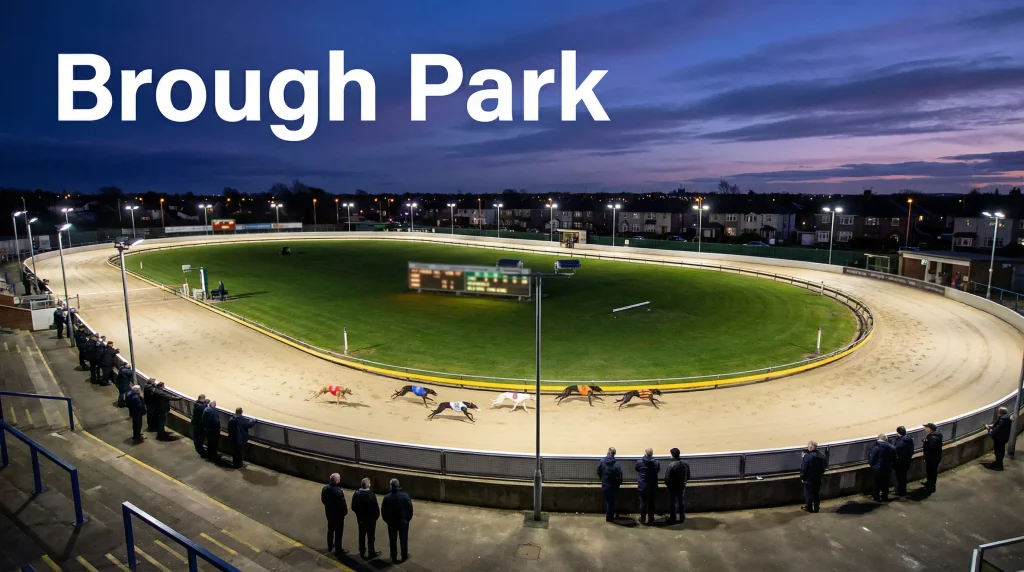
Brough Park is the North East’s greyhound venue — a GBGB-licensed stadium in Newcastle upon Tyne that stands as the most northerly track in England’s licensed greyhound racing circuit. With no active licensed venues in Scotland and the nearest alternative several hours south, Brough Park occupies a unique position: it is the sole provider of regulated greyhound racing for the entire top third of England. That isolation shapes everything from the kennel pool to the fixture schedule and, ultimately, the nature of the results it produces. The wider context is set out in our UK greyhound results guide.
For punters, Newcastle represents North East racing in its purest form. The dogs that race here are predominantly trained by local kennels, the fields reflect a regional competitive ecosystem rather than a national one, and the form data has a self-contained quality that rewards careful, track-specific analysis. Understanding Brough Park’s layout, how to access its results and what its fixture pattern looks like is essential for anyone who takes greyhound form seriously beyond the southern and Midlands circuits.
Brough Park Track Profile
Brough Park races over distances of 270, 480 and 640 metres, with the 480m trip as the track’s standard distance. The circuit is a compact oval with relatively tight bends, which gives inside draws a measurable structural advantage. A greyhound in trap 1 or 2 at Brough Park saves meaningful ground through the turns compared with a wide seed, and this shows up in the aggregated results data as a higher-than-average inside win rate.
The 270m sprint is a short, sharp blast from boxes to line. At this distance, the race is usually decided by the break — a dog that hits the lid cleanly and reaches the first bend in front will win more often than not, because there is simply no room on the track for rivals to pass. Form data from these sprints is useful primarily for identifying early pace, but it should not be used as a reliable indicator of a dog’s overall ability.
The 480m distance is where Brough Park’s form book carries real analytical weight. Races at this trip develop enough shape for tactical differences to emerge: a dog that leads from trap versus one that runs on from behind, a fast breaker that fades in the final straight versus a closer that times its run through the field. Sectional times at 480m reveal whether a dog is winning on raw pace or on stamina, and that distinction matters when assessing how a result might translate to other tracks with different geometries.
The 640m marathon is the endurance test on Brough Park’s card. It attracts a smaller, more specialised pool of runners — dogs whose stride pattern and temperament suit the extra distance. Results at 640m are less frequent but offer a different angle on a dog’s profile that the standard middle-distance form cannot provide. The sand surface is maintained to GBGB regulatory standards, and going conditions at Newcastle are influenced by the North East’s climate — wetter and cooler than southern venues for much of the year, which can produce a slower, more holding surface during autumn and winter months.
Accessing Newcastle Results
Newcastle results are published through the same data infrastructure as every other licensed track. GBGB data feeds push finishing positions, starting prices, sectional times and race comments to bookmaker platforms and independent form sites after each race. There is nothing different about the delivery mechanism — the same systems that carry Romford or Monmore results carry Brough Park data with equal reliability.
One characteristic of Newcastle results that is worth noting is the track’s slightly lower profile in national media coverage. While the data itself is comprehensive and reliable, Brough Park receives less editorial attention from tipsters and form commentators than higher-profile southern venues. This is not a reflection of data quality — it is simply a function of geography and media concentration. For punters willing to do their own analysis rather than relying on published tips, this relative obscurity can be an advantage: the betting market on Newcastle races may be less efficient than at heavily scrutinised venues, creating opportunities for those who study the form independently.
The broader context of greyhound welfare and regulation also touches Newcastle’s position in the sport. One senior scientific adviser from RSPCA Cymru described the activity as posing predictable dangers, stating that greyhounds racing around an oval track at high speed is inherently dangerous and puts them at risk of predictable, avoidable and unnecessary injury and death.
(Dogs Today Magazine) These welfare concerns sit alongside the results data and shape the regulatory framework within which Brough Park operates — a framework designed to minimise harm while maintaining the sport’s licensed standards.
Newcastle Fixture Calendar
Brough Park’s fixture schedule includes a mix of BAGS afternoon meetings and evening open cards, though the total number of meetings per week is typically lower than at the busiest southern venues. This reflects both the regional kennel pool size and the commercial demand for North East greyhound content in the BAGS programme. The track does not race daily, which means there are gaps between meetings that affect how quickly form accumulates for individual dogs.
For form analysis, this lower frequency has a practical implication. A dog that races primarily at Brough Park may have fewer recent results to work with than one campaigned at a high-volume venue. This does not make Newcastle form less valuable — it simply means that each individual result carries slightly more weight in the overall assessment. A single poor run at a track where a dog races once a week is more significant than the same result at a venue where it runs every three days, because the sample is smaller and each data point is proportionally more important. Conversely, a strong run on limited starts carries greater authority than the same performance buried in a long sequence of frequent outings where occasional good form is inevitable by variance alone.
Evening open meetings at Brough Park attract the strongest local fields and occasionally draw entries from further afield. These fixtures provide the clearest test of quality for Newcastle-based dogs, and the results from these meetings are the most useful for assessing whether a runner could compete at a wider level. Feature events and regional competitions round out the calendar, adding competitive peaks that give the form book an extra dimension beyond the standard graded programme. Every other venue is listed in results by track.
The fixture list is published weekly through GBGB and all major form sites. Given Newcastle’s position as the only licensed North East venue, its schedule is straightforward to track — there is no competing local fixture to split attention, and every Brough Park meeting is, by definition, the only licensed greyhound racing happening in the region on that day.
