
Greyhound Results Hove — Brighton and Hove Track Data
 Available in US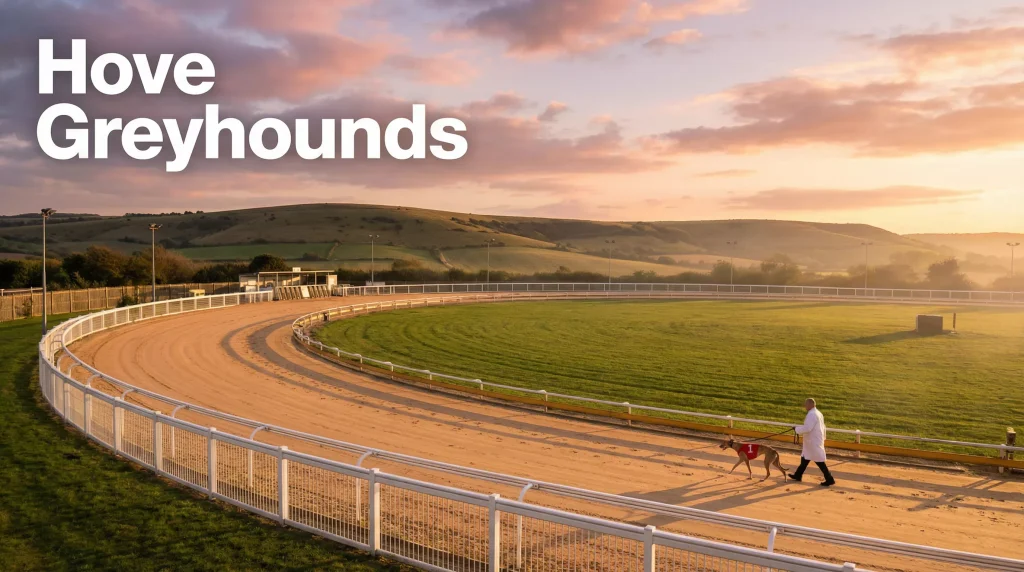
Brighton and Hove Greyhound Stadium is one of the most recognisable venues on the UK greyhound circuit — a South Coast track with a long history, a loyal local following and a fixture list that keeps it firmly in the conversation for punters and form analysts across the country. It sits among the 18 GBGB-licensed stadiums currently operating in England and Wales, and its position on the southern coastal strip gives it a geographical distinctiveness that translates into genuine track character. The wider context is set out in our UK greyhound results guide.
For anyone following greyhound results with a regional focus — or simply looking for south coast speed in their form book — Hove is a track that demands attention. It races regularly, hosts a solid mix of graded and open events, and produces results data that feeds into the national form picture with consistent reliability. The track’s profile, its fixture calendar and the specifics of how to access its results are all worth understanding in detail.
Hove Track Profile: Distances and Layout
Hove operates over three standard distances: 285, 500 and 695 metres, with the 500m trip serving as the track’s primary race distance. The circuit is a fair-sized oval — not as tight as Romford, not as expansive as Towcester — which produces a racing style that generally rewards balanced dogs capable of both early pace and stamina through the final bend.
The 285m sprint is a pure speed test, over almost before it begins, and results at this distance are heavily influenced by trap draw and break speed. The 500m distance is where the track’s form data is most substantial and most useful: it is long enough to allow tactical races to develop and short enough to prevent stamina-only plodders from dominating. The 695m marathon distance is rarer on the card but attracts a dedicated subset of long-distance specialists whose form profiles differ markedly from the standard middle-distance runner.
Track geometry at Hove favours greyhounds with a clean, economical running style. The bends are of moderate radius, which means that inside draws carry an advantage but not an overwhelming one. A strong middle-seed dog — say, trap 3 or 4 — with good early pace can compete on roughly equal terms with an inside draw, provided it breaks cleanly and avoids trouble at the first turn. This produces slightly more competitive races than you might find at a tighter venue, and it means that form figures from Hove tend to be more transferable to other mid-sized tracks.
The surface is sand, maintained to GBGB regulatory standards with regular inspections. Going conditions at Hove can be affected by the coastal climate — the proximity to the sea introduces moisture variability that inland tracks do not experience. Punters who track going conditions as part of their analysis will find that Hove’s times can shift noticeably between a dry summer evening and a damp autumn card, and adjusting expectations accordingly is part of reading the track’s results intelligently.
Trainers based in the south-east often view Hove as a natural secondary venue to complement a Romford or Crayford campaign. A dog that handles both Hove’s more flowing bends and Romford’s tighter geometry is demonstrating genuine adaptability, and that versatility shows up in the form figures as consistent finishes across different track profiles. For punters, spotting a dog that performs at Hove and carries that form elsewhere is a useful marker of quality that single-track records cannot always reveal.
Accessing Hove Results and Meeting Data
Hove results are published through the standard GBGB data infrastructure. After each race, finishing positions, starting prices, sectional times and race comments flow into bookmaker platforms and independent form databases. The major betting sites carry Hove results as a default fixture, and dedicated greyhound form sites typically provide additional detail — split times, race-by-race going description and trainer information — for those who want to dig deeper.
Accessing results for a specific Hove meeting is straightforward. Most results platforms allow filtering by track name and date, which isolates a particular card and displays it in chronological race order. For punters who follow Hove regularly, bookmarking the track’s results page on a preferred form site saves time and avoids the friction of navigating a general results aggregator each time.
One practical note: Hove often stages both BAGS afternoon fixtures and open evening meetings. When pulling results for analysis, it helps to be deliberate about which session you are reviewing. An afternoon BAGS card and a Saturday evening open meeting at the same venue can produce meaningfully different competitive environments, and treating all Hove results as interchangeable can introduce noise into a form assessment. Checking the meeting time and fixture type before drawing conclusions is a small discipline that pays off over time. Most form databases allow you to filter by meeting type, and taking that extra step produces a cleaner dataset for any track-specific analysis.
Hove Fixture Calendar and Open Races
Hove maintains a consistent racing calendar, with multiple fixtures per week including regular BAGS afternoon meetings and scheduled evening open cards. The track also features prominently in the national open-race programme, hosting events that attract entries from beyond the regular Hove kennel pool. These open races are typically staged at the 500m distance and carry higher prize money than standard graded fare, drawing stronger fields and offering a different competitive test.
The open-race calendar is relevant for form analysts because it introduces an element of class comparison. A dog that wins a graded A2 race at Hove is performing within a known competitive band, but a dog that places in an open event at the same track is being tested against a broader talent pool. Noting which results come from open fixtures — and weighing them accordingly — adds a layer of nuance to a form assessment that a simple win-loss record cannot capture.
Hove’s fixture list also reflects the broader commercial dynamics of UK greyhound racing. With total annual prize money across all licensed racing sitting at approximately £15.7 million, individual tracks compete for their share of that pot through the quality and frequency of their fixture programme. Hove’s consistent presence on both the BAGS schedule and the open-race calendar indicates a venue that balances commercial obligation with sporting ambition — and the results it produces week after week are a direct reflection of that balance. Every other venue is listed in results by track.
For practical fixture planning, the GBGB website and all major form sites publish the upcoming week’s schedule including start times and meeting type. Hove’s calendar is typically stable enough to plan around, though occasional fixture adjustments do occur, particularly during peak holiday periods or when weather conditions force a rescheduling.
