How Many Greyhound Tracks Are There in the UK — 2026 Map
 Available in US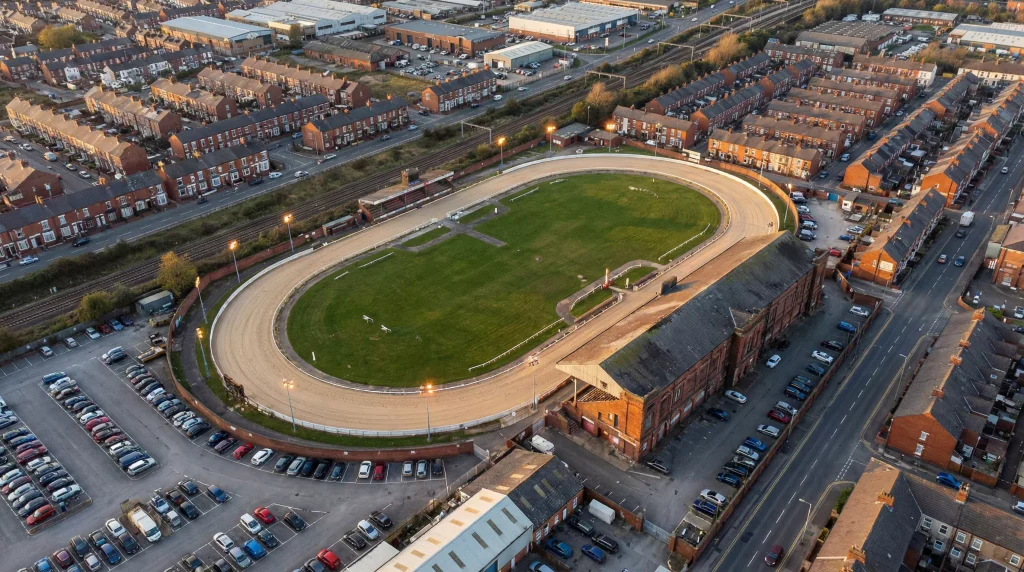
As of 2026, there are 18 GBGB-licensed greyhound stadiums operating in the United Kingdom — all of them in England, with the sole exception of one track in Wales. Scotland has no active licensed venues. That number has been declining steadily for decades, driven by a combination of commercial pressures, property development, changing entertainment habits and, more recently, legislative action. The question of how many tracks remain is not just a matter of counting venues — it is a window into the sport’s trajectory and a live variable that affects everything from fixture volume to the depth of form data available for analysis. The full picture is in our UK greyhound results guide.
Understanding where the 18 tracks are located, where the geographic gaps lie and why the number has fallen from its historical peak gives essential context for anyone following UK greyhound results. The footprint of the sport is not static, and the map in 2026 looks markedly different from the one that existed even a decade ago — with further changes on the horizon as legislative bans in Wales and Scotland move towards implementation.
The 18 Licensed Tracks in 2026
The 18 licensed venues are spread unevenly across England and Wales. The concentration is heaviest in the south-east, with multiple tracks within an hour’s drive of central London, including Romford, Crayford and Hove. The Midlands is served by Monmore Green in Wolverhampton and other venues in the region. The North has Owlerton in Sheffield and Brough Park in Newcastle — the most northerly licensed track in the country. Wales has a single licensed venue: Valley Stadium in Ystrad Mynach, which is now directly affected by pending legislation.
Each of these 18 tracks operates under the regulatory oversight of the Greyhound Board of Great Britain (GBGB), which sets licensing standards covering everything from track surface maintenance and veterinary provision to race grading and results publication. The licence is what distinguishes a GBGB-regulated venue from an independent or “flapping” track that operates outside the official regulatory framework. Only results from licensed tracks feed into the GBGB data system, which means the form book that punters rely on is built exclusively from data generated at these 18 venues.
The full list of licensed tracks shifts occasionally — venues can lose their licence or close, and in theory new ones could open, though that has not happened in recent years. The 18-venue figure is the most current as of early 2026, but it should be understood as a snapshot rather than a permanent fixture. The number was higher five years ago and may be lower within the next few years, depending on legislative and commercial developments.
For punters, the practical significance of the 18-track figure is that it defines the total universe of regulated greyhound racing in Britain. Every official result, every SP, every grading decision and every injury report originates from one of these 18 venues. The data is comprehensive within that perimeter but does not extend beyond it — unregulated tracks produce their own results, but those results do not appear in the standard form databases and carry no regulatory guarantee of accuracy or integrity.
Geographic Gaps: Scotland, Wales and Regional Concentration
The most striking feature of the 2026 track map is the absence of licensed greyhound racing in Scotland and, soon, in Wales. Scotland’s last licensed venues closed years ago, and the Greyhound Racing (Offences) (Scotland) Bill, introduced in the Scottish Parliament on 23 April 2025, would criminalise the activity entirely. The Scottish Government has endorsed the Bill’s general principles, and the legislative pathway towards a full ban is well advanced.
Wales faces a similar trajectory. The Prohibition of Greyhound Racing (Wales) Bill was introduced in the Senedd on 29 September 2025 and cleared its first legislative hurdle on 16 December 2025, with members voting 36 to 11 in favour of the general principles. The ban could take effect between April 2027 and April 2030, which would close Valley Stadium — the only licensed Welsh venue — and reduce the UK total from 18 to 17. Delyth Jewell MS, Chair of the Senedd’s Culture Committee, stated that no level of regulation could make the activity safe enough to protect greyhounds from predictable harm.
Even within England, the geographic distribution is heavily weighted towards the south and the Midlands. London and the Home Counties are well served, with several tracks within easy reach of the capital. The Midlands has Monmore and other venues. But large swathes of the country — much of East Anglia, the South West, the North West and the far North — have no licensed track within practical travelling distance. This concentration reflects both historical patterns of track development and the commercial reality that venues closer to large population centres are more financially viable.
For form analysis, the geographic gaps matter because they create regional ecosystems. Dogs trained in the North East race predominantly at Brough Park; dogs based in the south-east rotate between Romford, Crayford and Hove. Cross-regional form — where a dog that typically runs at one venue enters a race at another — is less common than intra-regional movement, and interpreting it requires understanding the differences between track geometries, distances and competitive standards. The 18-track map defines the boundaries of these ecosystems.
Tracks That Have Closed and Why
The current figure of 18 is a fraction of the number of licensed greyhound tracks that once operated in Britain. At the sport’s peak in the mid-twentieth century, dozens of stadiums were active across the country, drawing large crowds and generating significant betting turnover. The decline has been driven by several overlapping factors, none of which has a single dominant explanation.
Property development is the most frequently cited cause. Many greyhound stadiums occupied prime real estate in urban areas — land that became increasingly valuable for residential or commercial development as property prices rose. Wimbledon, Walthamstow and Catford in London, Hall Green in Birmingham, and multiple other venues were sold for redevelopment, with the greyhound operation displaced and, in most cases, not relocated. The economics were straightforward: the land was worth more as housing than as a racing venue.
Declining attendance and shifting entertainment habits also played a role. Greyhound racing was once a mainstream evening out — a social event as much as a sporting one. As competing entertainment options expanded and the sport’s cultural profile contracted, attendance figures fell, eroding the on-course revenue that many tracks depended on. The growth of remote betting partly compensated for this decline by sustaining betting turnover through BAGS fixtures, but it did not replace the gate money and on-course spending that had sustained venues as live-entertainment businesses. Two nations are legislating against them: the Welsh ban.
More recently, welfare concerns and legislative pressure have become a direct factor in track closures and the broader threat to the sport’s footprint. The Welsh and Scottish bans represent the first instances of legislative prohibition in the UK, and their success or failure may influence political appetite for similar measures in England. For the 18 tracks currently operating, the commercial and regulatory environment remains challenging — and the number 18 should be understood not as a floor, but as the current position on a long downward curve that has been running for the best part of a century.
